
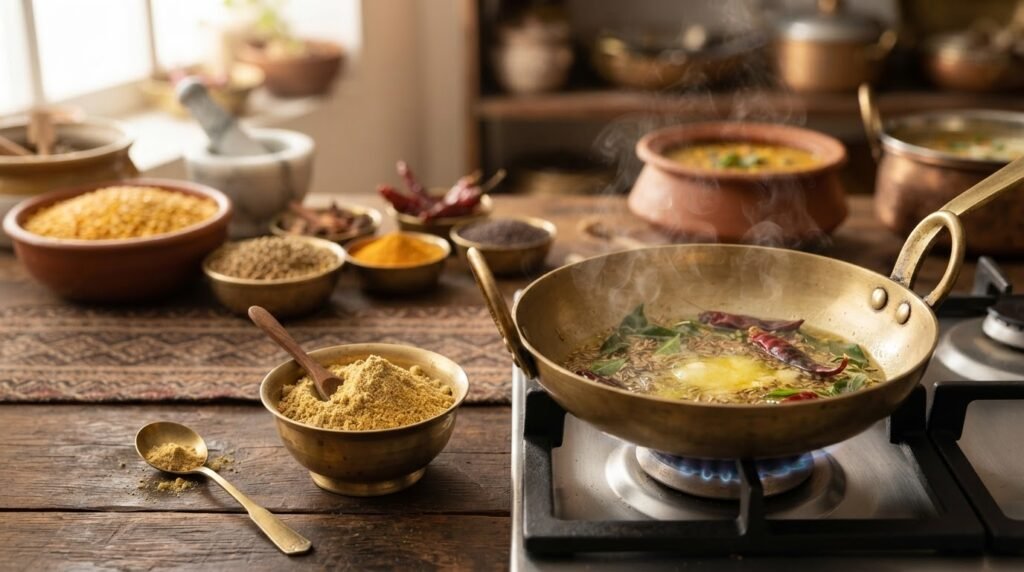
Hing, also called heeng or asafoetida, is used in small quantities to add a distinctive savoury aroma to many Indian dishes. The best way to use it depends on the form and strength of the product. This practical guide explains when to add hing, how much to start with, and which everyday recipes commonly use it.
How to add hing to tadka
Heat oil or ghee as your recipe requires. Add a small quantity of hing according to the pack directions, let it bloom briefly, and then add cumin, mustard seeds or other tempering ingredients. Do not let it burn. Because hing products differ in formulation and strength, begin with a little and adjust to taste.
10 dishes that commonly use hing
- Dal tadka: add hing during the tempering for a characteristic savoury aroma.
- Rajma: use a small amount in the masala base, following your recipe.
- Punjabi chole: hing can complement the spices used in the curry.
- Kadhi pakora: add it to the tempering for a familiar flavour.
- Sambhar: use it as directed in your regional recipe.
- Rasam: a little hing may be included in the seasoning.
- Aloo sabzi: it works in simple potato preparations.
- Poha: a pinch can be added to the tempering.
- Upma: use it with mustard seeds and curry leaves if the recipe calls for it.
- Pickles: some traditional pickle recipes include hing; follow the recipe’s measured quantity.
How much hing should you use?
There is no universal measure for every hing product. Compounded powders, blends and resin forms can differ significantly. Read the ingredient list and usage directions, start with a very small quantity, and adjust to your recipe and taste. Avoid assuming that the same spoon measure works for every brand or formulation.
Hing in cooking without onion and garlic
Hing is a familiar ingredient in many Indian recipes prepared without onion and garlic. If you follow a strict Jain, satvik or other dietary requirement, read the full ingredient and allergen declaration on the particular pack. Compounded hing can contain ingredients in addition to asafoetida.
How to store hing
Keep the pack tightly closed in a cool, dry place away from moisture, direct sunlight and strong odours. Use a clean, dry spoon and follow the storage instructions and best-before date printed on the pack.
Explore Grahshri Hing and more guides
Explore Grahshri Hing product details and availability. For a buyer-focused overview, read Hing (Asafoetida): types, uses and how to choose good-quality hing, or visit the Grahshri Hing information page.
Editorial note: This article provides general cooking information, not medical advice. Product composition, recommended use and dietary suitability should be checked on the actual product label.