
Hing, also known as asafoetida, is a distinctive ingredient in many Indian kitchens. A small pinch can add a deep savoury aroma to dals, vegetable dishes, kadhi and many traditional recipes. But hing is sold in different forms and blends, so choosing a product can feel confusing. This guide explains the common types of hing, how to read a label and what to consider before buying.
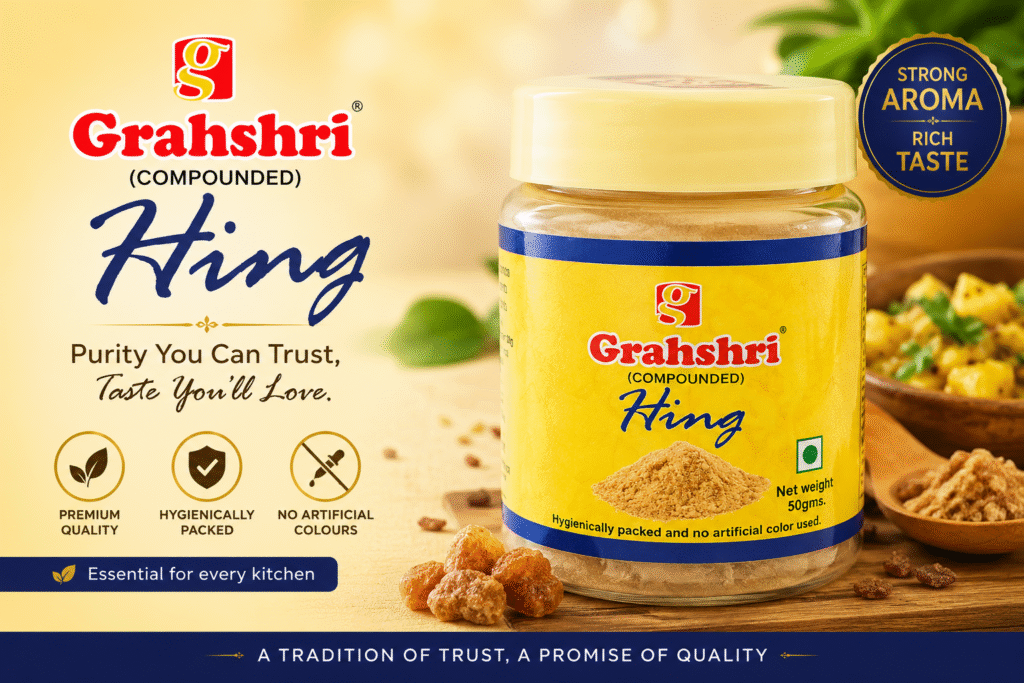
What is hing (asafoetida)?
Hing is a spice obtained from the dried oleo-gum-resin of certain Ferula plants. It has a strong aroma in its raw form. When heated briefly in oil or ghee, its sharp smell mellows and contributes a characteristic savoury flavour to food.
Common types of hing available in India
1. Compounded hing powder
Many retail hing powders are compounded products. They may combine asafoetida with permitted food-grade carriers or other ingredients to make the product easier to handle, measure and use. The exact composition varies, so check the ingredient list rather than assuming every powder has the same formulation.
2. Hing crystals, tears or resin
Some shops sell hing in resinous pieces or crystals. These forms are concentrated and have a strong aroma. They may need to be crushed or dissolved appropriately before use. Follow the seller’s directions and store them carefully.
3. Different grades and blends
Products can differ in aroma, texture, colour, strength and formulation. Names such as compounded, powder, crystal or resin describe forms or product styles; they do not by themselves prove purity or quality. Compare the label, ingredients and declared food-business details.
How to choose good-quality hing
- Read the ingredient list: Check what the product contains and whether the ingredients suit your cooking needs.
- Check the FSSAI details: Look for the food business operator’s name and address and the applicable FSSAI licence or registration number on the label. You can verify licensing information through official FSSAI resources.
- Look for clear packaging information: The pack should clearly show net quantity, batch or lot identification, date marking, storage instructions and customer-care details as applicable.
- Check the seal and pack condition: Avoid packs that are damaged, open, damp or appear tampered with.
- Buy from a traceable seller: Prefer a manufacturer or seller who provides clear product and contact information.
- Compare value, not just price: Consider the ingredient declaration, pack size, strength for your cooking style and the manufacturer’s information.
How to use hing in everyday cooking
Hing is potent, so start with a small quantity and adjust to taste. For many powdered products, a pinch added to warm oil or ghee for a few seconds is enough to release its aroma. Add the other ingredients promptly and avoid burning it, as overheating can make the flavour unpleasant. Always follow the directions on your product label.
How to store hing and keep its aroma
Keep hing in a tightly closed, food-safe container in a cool, dry place away from direct sunlight, moisture and strong-smelling ingredients. Close the lid immediately after use. Use a clean, dry spoon and follow the storage and best-before instructions printed on the pack.
Frequently asked questions
Is hing powder the same as pure hing resin?
Not necessarily. Many retail powders are compounded with food-grade ingredients, while resin or tears are a different form. Check the product’s ingredient declaration to understand what you are buying.
Why does hing have such a strong smell?
Hing contains naturally occurring sulphur-containing aroma compounds that give it its distinctive pungent smell. Heating a small quantity in fat changes the aroma and helps distribute its flavour through a dish.
How much hing should I add to a recipe?
There is no single amount for every product because strength and formulation vary. Begin with a small pinch, follow the pack directions and adjust according to the recipe and your taste.
Can hing be used in no-onion, no-garlic cooking?
Hing is commonly used to add savoury depth to many Indian dishes, including recipes prepared without onion and garlic. Check the full ingredient list if you follow a strict dietary requirement, because compounded products can contain additional ingredients.
Explore Grahshri Hing
Looking for hing for your everyday Indian cooking? Explore Grahshri Hing and review the product details and ingredient information on the product page before purchase.
Grahshri – bringing the familiar flavours of Indian cooking to your kitchen.
Editorial note: This article is for general food and shopping information. Product composition and labelling requirements can vary. Always rely on the current product label and applicable official food-safety guidance.
For readers comparing Delhi-based spice brands and suppliers, explore Grahshri’s spice range and business enquiry information for Delhi.
Explore our guide to 10 notable spice manufacturers in India, featuring Grahshri, with an overview of Indian spice brands and tips for choosing a supplier.
Further Hing Reading
Continue with our practical guide on how to use hing in Indian cooking, or read how to choose a hing manufacturer and supplier in India. You can also explore Grahshri Hing product details.