
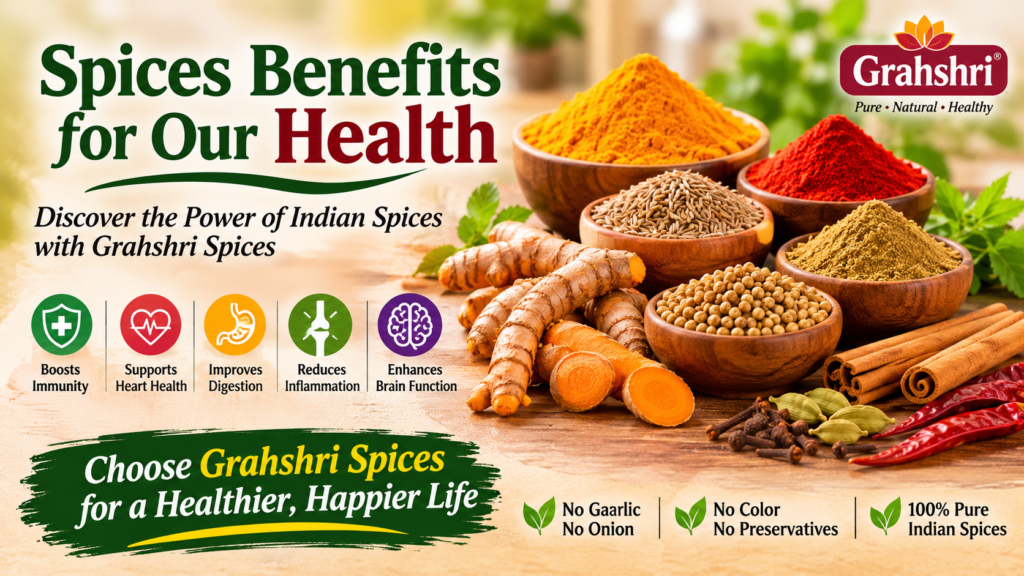
Indian spices do more than add colour, aroma and flavour to food. Many contain naturally occurring plant compounds that scientists are studying for their antioxidant, anti-inflammatory and metabolic effects. At Grahshri, we believe everyday cooking can be more enjoyable when you use quality spices thoughtfully—alongside a balanced diet and healthy lifestyle.
Why spices are an important part of a healthy diet
Spices are used in small quantities, but they can make meals more flavourful and varied. Research on culinary spices is exploring compounds such as curcumin in turmeric, gingerols in ginger, cinnamaldehyde in cinnamon and piperine in black pepper. Studies show promising results for certain health markers, although effects vary and spices are not medicines or substitutes for medical care.
Potential benefits of popular Indian spices
1. Turmeric (Haldi): antioxidant and inflammation research
Turmeric contains curcuminoids, including curcumin, which are studied for antioxidant and inflammation-related activity. Turmeric is a versatile ingredient in dal, vegetables, soups and curries. Evidence for treating specific conditions with turmeric is still developing, so enjoy it as a culinary spice rather than a treatment.
2. Ginger (Adrak): digestion and comfort
Ginger has a distinctive warming flavour and compounds called gingerols and shogaols. It is widely used in food and drinks, and research has examined its role in digestive comfort and nausea. Fresh ginger or a little dried ginger can add a lively taste to everyday recipes.
3. Cumin (Jeera): flavour and digestive tradition
Cumin brings an earthy, nutty aroma to dals, rice, vegetables and raita. It contains naturally occurring plant compounds and is traditionally used in Indian cooking to complement meals. Its potential health effects are being researched; it should not be viewed as a remedy for digestive disease.
4. Cinnamon (Dalchini): metabolic-health research
Cinnamon contains aromatic compounds and has been studied in relation to blood-glucose and metabolic markers. Results are not definitive, and different cinnamon varieties and study doses matter. Use a culinary pinch for flavour in oats, drinks, desserts or savoury dishes.
5. Black pepper (Kali Mirch): a flavourful source of piperine
Black pepper contains piperine, which contributes to its pungency and is studied for how it interacts with the absorption of some compounds. This interaction can also affect certain medicines, so concentrated pepper or piperine supplements should not be taken casually.
6. Coriander (Dhania): everyday flavour with plant compounds
Coriander seeds and leaves add freshness and depth to Indian food. They contain natural plant compounds and help build flavour without needing to rely only on excess salt. Use coriander powder in sabzi, curries, lentils and marinades.
7. Fenugreek (Methi): fibre and nutrition research
Fenugreek seeds contain fibre and other naturally occurring compounds. Research has explored their effects on blood-glucose and metabolic markers, but findings are not a replacement for diabetes treatment. Fenugreek has a pleasantly bitter taste and works well in pickles, dals and spice blends.
8. Cardamom (Elaichi) and cloves (Laung): aromatic additions
Cardamom and cloves contribute powerful aromas and naturally occurring compounds that are being investigated in laboratory and nutrition research. Their everyday culinary role is simple: add fragrance, variety and a memorable taste to tea, rice, desserts and savoury dishes.
How Grahshri spices can support better everyday cooking
Grahshri spices are made for home cooks who want rich, familiar Indian flavours. A thoughtfully stocked spice shelf can make it easier to prepare satisfying meals at home and explore different recipes. Choose spices that suit your dish, use sensible quantities, and store them sealed in a cool, dry place away from direct sunlight and moisture.
- Build flavour: use cumin, coriander, turmeric and other spices to create depth in everyday dishes.
- Cook with variety: rotate spice combinations across vegetables, dals, rice and curries.
- Keep portions balanced: spices add flavour, but overall health depends on the whole meal, not one ingredient.
- Choose quality: buy from a source that clearly identifies the product and protects it from moisture and contamination.
Are spices a medicine or a replacement for treatment?
No. Culinary spices are ingredients—not a cure for diabetes, heart disease, infection, inflammation or any other illness. Clinical research is promising in some areas but varies by spice, dose, preparation and study population. Do not stop prescribed medicines or use high-dose spice extracts without discussing them with a healthcare professional. People taking medicines, pregnant or breastfeeding individuals, or those with liver, gallbladder or other medical conditions should seek professional advice before using concentrated supplements.
Frequently asked questions about spices and health
Which Indian spices are commonly studied for health benefits?
Turmeric, ginger, cinnamon, fenugreek, cumin, black pepper, cardamom and chilli are among the culinary spices studied for their natural compounds and possible effects on health markers. Research is ongoing and does not establish them as treatments.
Can eating spices every day be healthy?
Using moderate amounts of spices in a varied, balanced diet is a practical way to enjoy flavour and plant compounds. Individual tolerance matters—very spicy foods may trigger discomfort in some people.
Do Grahshri spices cure health problems?
No. Grahshri spices are food ingredients intended to add flavour and aroma to cooking. They are not marketed here as medicines or cures.
How should I store spices to preserve freshness?
Keep spices in tightly closed containers, in a cool, dry cupboard, away from heat, sunlight and steam. Use a dry spoon and avoid storing spice jars directly beside the stove.
Enjoy the goodness of everyday cooking with Grahshri
From the golden warmth of turmeric to the aroma of cumin, ginger, cinnamon and cardamom, spices bring character to meals and connect us with India’s food traditions. Choose good-quality spices, use them in moderation, and pair them with vegetables, whole grains, legumes, adequate hydration and an active lifestyle.
Explore Grahshri spices: Visit Grahshri.in for our range of Indian spices and inspiration for everyday cooking.
Health note: This article is for general information and is not medical advice. The benefits discussed are potential or under scientific investigation, and evidence does not mean a spice will prevent or treat disease.
Sources and further reading
- Clinical evidence review of culinary herbs and spices and metabolic health (Nutrients, 2023)
- National Center for Complementary and Integrative Health: Turmeric—usefulness and safety
- Randomized trial examining ginger, cinnamon and black seed in metabolic syndrome