
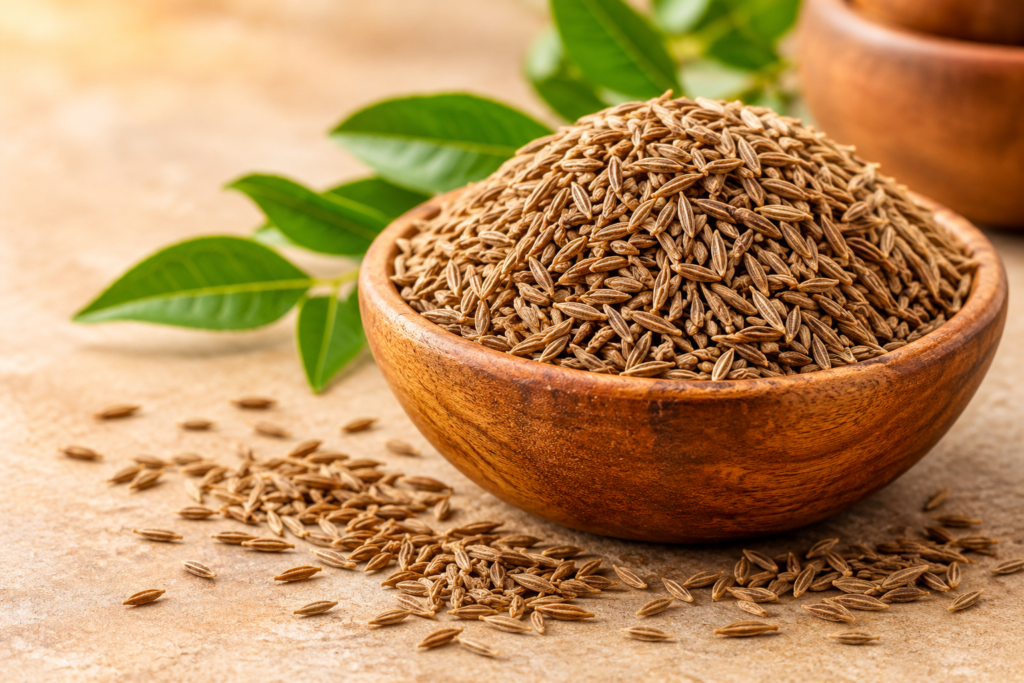
Cumin seeds, commonly known as jeera in India, are one of the most recognisable spices in everyday Indian cooking. Their warm, earthy aroma and gently peppery flavour make them a favourite for tadka, dals, curries, rice dishes and spice blends. Used whole, lightly roasted or ground, cumin adds depth without overpowering the other ingredients.
What Are Cumin Seeds?
Cumin comes from the dried seeds of the Cuminum cyminum plant, a member of the parsley family. The slender, ridged seeds are usually tan to brown in colour. In Indian kitchens, they are commonly called jeera and are valued for their distinctive fragrance when warmed in oil or dry-roasted.
Why Is Jeera So Popular in Indian Cooking?
Cumin has a flavour that is earthy, warm and slightly nutty, with a mild bitterness that becomes rounder when toasted. It pairs well with lentils, beans, vegetables, rice and many other spices. A small amount can give a dish a recognisable savoury aroma.
How to Use Whole Cumin Seeds
- For tadka: Add cumin seeds to moderately hot oil or ghee and let them sizzle briefly before adding the other ingredients.
- For dals and curries: Use a cumin tempering to build a warm, savoury base.
- For rice: Fry a little jeera in ghee or oil before adding rice and water for jeera rice.
- For dry roasting: Roast seeds over low heat, stirring frequently, until fragrant. Cool before grinding.
- For spice blends: Combine roasted or ground cumin with other spices according to the recipe.
Whole Cumin vs. Roasted Cumin vs. Cumin Powder
Whole cumin seeds are ideal when you want the seeds to release their aroma in hot oil or remain visible in a dish. Roasted cumin develops a deeper, toastier flavour and is useful in raita, chaas, chutneys and seasoning mixes. Cumin powder distributes flavour more evenly through marinades, gravies and dry mixes. For the freshest aroma, grind roasted seeds in small batches when needed.
How to Choose Good-Quality Cumin Seeds
- Look for seeds that are reasonably uniform in size and natural tan-brown colour.
- Choose a pack with a clean, characteristic cumin aroma.
- Check that the seeds are dry and free from visible moisture, mould or unusual debris.
- Read the label for the net quantity, packing details, best-before date and storage instructions.
- Buy from a reliable seller and keep the pack sealed after opening.
How to Store Cumin Seeds
Store jeera in a clean, dry, airtight container away from direct sunlight, heat and moisture. Always use a dry spoon. Proper storage helps preserve its aroma and keeps the seeds in good condition. Avoid storing spices near a stove or sink, where temperature and humidity can fluctuate.
Easy Kitchen Idea: Jeera Tadka
Warm a little oil or ghee in a small pan. Add whole cumin seeds and allow them to sizzle for a few seconds without burning. Pour the fragrant tempering over cooked dal, vegetables or khichdi. Adjust the quantity to suit the dish and your taste.
Bring the Aroma of Jeera to Your Kitchen with Grahshri
At Grahshri, we believe everyday cooking starts with thoughtfully selected spices. Explore our Whole Spices collection for ingredients that bring familiar aroma and flavour to your kitchen.
Cooking tip: Cumin is aromatic, so begin with a modest quantity and adjust to your recipe. Toast it gently—overheating can make it taste bitter.