
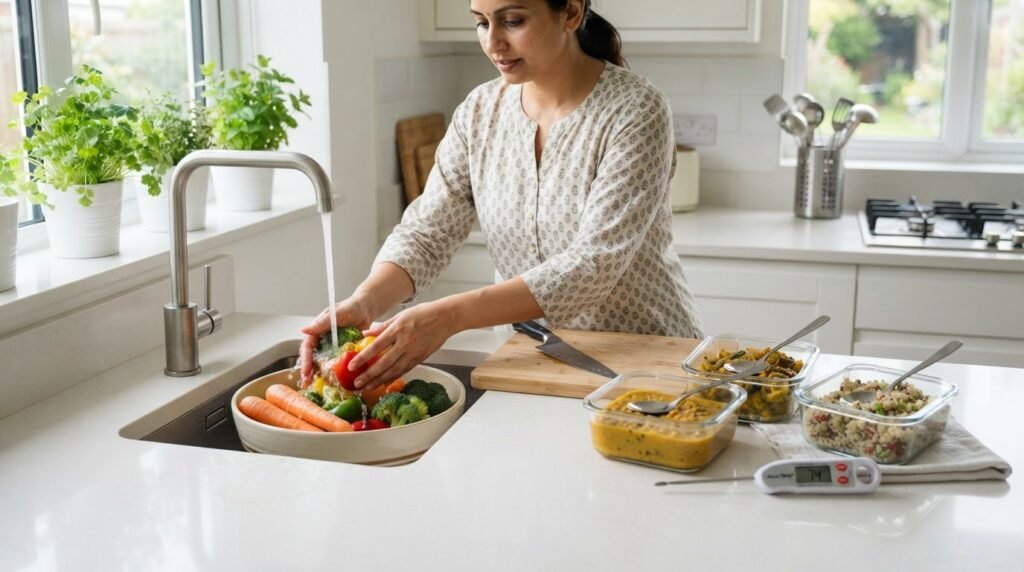
Food safety is an everyday responsibility—whether you are cooking at home, buying groceries, preparing meals for children, or running a food business. Following simple food hygiene practices helps reduce the risk of foodborne illness and keeps meals fresh, wholesome and safe. This practical guide covers essential food safety tips in India, from handwashing and storage to cooking, leftovers and kitchen cleanliness.
Why food safety matters
Unsafe food can carry harmful bacteria, viruses, parasites or chemical contaminants. Food may look and smell normal and still be unsafe. Good food hygiene—from purchase to serving—helps protect families, customers and communities, particularly young children, older adults and people with weakened immunity.
5 essential food safety practices
- Keep clean: Wash hands with soap and water before preparing food, after using the toilet, handling raw meat or eggs, touching garbage, or cleaning.
- Separate raw and cooked food: Keep raw meat, poultry, seafood and eggs away from ready-to-eat food. Use separate boards and utensils when possible.
- Cook thoroughly: Cook food fully, especially meat, poultry, eggs and seafood. Use a food thermometer where practical rather than relying only on colour.
- Keep food at safe temperatures: Refrigerate perishable foods promptly. Keep hot food hot and cold food cold; avoid leaving cooked dishes out for long periods.
- Use safe water and ingredients: Choose clean water, fresh ingredients, reputable sources and food products with intact packaging and clear expiry or best-before information.
Safe food storage at home
Store raw foods separately from cooked or ready-to-eat items. Keep your refrigerator cold (ideally at or below 4°C), use covered containers, and place raw meat or seafood in leak-proof containers on the lowest shelf. Keep dry staples, grains, pulses and spices in clean, dry, airtight containers away from moisture, heat, pests and direct sunlight.
Follow the product label and use older items first. Do not taste food to decide whether it is safe, and discard food with uncertain storage history.
Food hygiene while cooking Indian meals
Before making dal, rice, sabzi, chutney or any home-cooked meal, wash produce under clean running water, clean your work surfaces, and keep raw and cooked ingredients separate. Avoid washing raw poultry in the sink because splashes can spread germs around the kitchen. Use clean serving spoons, and do not put a utensil that has touched raw food back into cooked food.
Leftovers: cool, refrigerate and reheat safely
Refrigerate cooked food promptly—ideally within two hours, and sooner in hot weather. Divide large portions into smaller, shallow containers so they cool faster. Reheat leftovers thoroughly until steaming hot throughout, and avoid repeatedly cooling and reheating the same dish. When in doubt about how long food has been left out, discard it.
Food safety when buying packaged food in India
- Check the manufacturing, expiry or best-before date and the storage instructions.
- Look for intact seals and packaging; avoid swollen, leaking, damaged or tampered packs.
- Read ingredient lists and allergen declarations carefully.
- For packaged food, look for applicable FSSAI licence or registration details and other label information.
- Buy from reliable shops and maintain proper storage after opening.
Clean kitchen habits that make a difference
Wash dishcloths and reusable sponges regularly, sanitise food-contact surfaces appropriately, keep dustbins covered, control pests, and clean refrigerator shelves and handles. Replace damaged chopping boards and keep kitchen equipment clean and dry between uses.
Food safety checklist for every kitchen
- Hands washed before food preparation
- Fresh produce washed with safe water
- Raw and ready-to-eat foods separated
- Food cooked thoroughly
- Perishable foods refrigerated promptly
- Leftovers stored in covered containers and reheated thoroughly
- Kitchen surfaces, utensils and storage containers clean
- Food labels and allergen information checked
Food safety in India: trusted guidance
For food businesses, home kitchens and consumers in India, follow current food hygiene and labelling requirements from the Food Safety and Standards Authority of India (FSSAI) and local authorities. Food safety practices should be part of every stage—from sourcing and storage to cooking, packaging, transport and serving.
Takeaway: Clean hands, separate raw and cooked food, cook thoroughly, keep food at safe temperatures, and use safe water and ingredients. Small daily habits can make a meaningful difference in food safety.
This article is for general food-hygiene awareness and does not replace official food safety guidance. For food businesses, follow applicable FSSAI regulations and requirements.